
31. March 2026
Henrike Schwickert, MushRoots
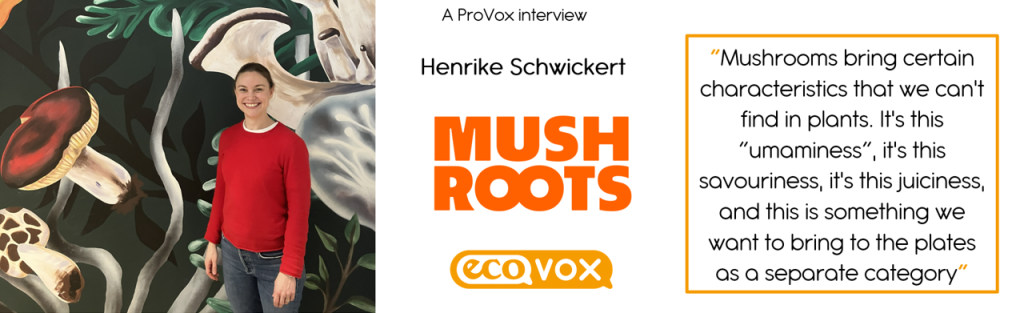
EcoVox: Hi Henrike, tell me about MushRoots, the recent retail launch you've made and what your role is here please.
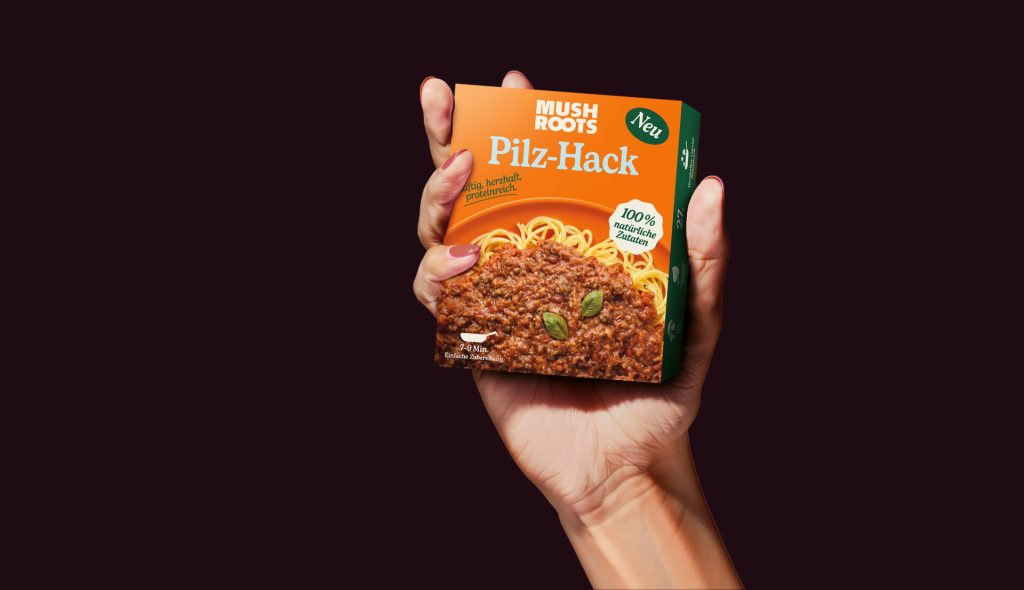
MushRoots is developing and selling food products based on mushrooms. Mushrooms are always the first ingredient in our products, because we think that they are underrepresented in our diets. Our mission is to bring more mushrooms to our plates in an innovative and delicious way. I'm leading the sales team here and we just launched at Rewe in the north of Germany and in Austria, at Billa Plus with our four products, bringing the mushroom taste to the people.
EcoVox: Just as little icebreaker, have you seen any good films lately that had an interesting slant on environmental issues?
A film that stuck with me was Perfect Days, and I watched it twice as I found so fascinating. It's about this Japanese man cleaning toilets in Tokyo and he is living a very, simple, quiet life on his own. There is not much of a direct environmental connection to it at first sight, but every day during his lunch break he photographs the same tree, observing it through the seasons and over the years. This subtle connection to nature and how this tree became part of his life I found very moving – how nature or this tree in particular became an anchor in his life.
EcoVox: I've seen it as well. It's a beautiful film, yeah. It's a hymn to living with just what you need. He does without very much, but he's the happiest, most content person you see in the film. The thing that made me laugh was, he always listens to cassettes when he's driving around and his younger colleagues start to think he's really cool, because cassettes have got this hipster value, and they're trying to take his cassettes and sell them for lots of money. Is there anything you're reading that's made you think about things in different ways, or educated you on something?
I read Orbital by Samantha Harvey, a book about six astronauts in the international space station that rotates 16 times around the Earth during one day. The author is writing in such a poetic way, always connecting the personal stories of the astronauts and their own families, to human life on Earth. A central theme is how small we are as humans compared to this big earth and what we are doing to our planet, watching from above. This book left a very strong feeling with me.

EcoVox: At EcoVox we posit this idea of a “Meconomy” where people are primarily interested in conserving their own resources, whether that's time, money, not wasting things. Can we talk a little bit about how what you do saves individuals or society money, time, or resources?
Our products focus on providing a fantastic savoury taste, an outstanding juiciness and the joy of cooking and eating. They also serve people in that they are very easy and intuitive to prepare and to cook, so consumers get a delicious taste and a great nutritional profile that they can integrate easily into their daily lives. From our perspective, mushrooms are such an efficient raw material, because they consume very little water, need very little space to grow and they are quick and easy to harvest. You are very independent from weather conditions, from climatic impacts and it takes about 19 days to grow and harvest a mushroom.
EcoVox: Do you have any things you do in your life which, reduce your impact and save you time, or save your money?
Food waste and food loss account for up to, I think, 10% of the annual global greenhouse emissions and we use a lot of land to produce food that is never eaten eventually. My tip here is to do some meal plans for the week, mostly with seasonal products. I consider how I will travel during the week or if there will be stressful days and sometimes freeze dishes, to be prepared for those days where I don't have much time to cook and this turns out to be my main hack.
EcoVox: Can you talk a little about how your products benefit people's wellbeing, health, or nutrition?
Our MushRoots products are high in protein, but they are also a source of fibre and are very digestible, so you don't feel full, but satisfied. Because our products are not over-seasoned, you don't have any aftertaste or anything that irritates your mouth. People can enjoy genuine flavour with balanced, wholesome nutrition.
EcoVox: Are you benefitting people at a local level or a community level?
We are working on producing the raw material of the future from a biotechnology side, which is then producing mushrooms even more efficiently. This production technology ensures food security across the world, because you can use it even in places where you might not be able to grow plants or have animals because they are so arid and dry. The technology has the potential to decentralise production and strengthen local food systems.
EcoVox: So the ambition would be that it could be “Hamburg grown” so you get that local provenance?
That's the ultimate ambition.
EcoVox: What kind of metrics or information are you sharing on your environmental or nutritional credibility?
We outline the macronutrients, that our products are rich in protein, that they are a source of fibre, that they are low in saturated fatty acids. This is something that consumers look for so that they get a nutritionally balanced profile. We also underline the naturalness that comes from the mushrooms, that our products are free from artificial aromas, from flavour enhancers and that mushrooms are always the primary ingredient. We feel like this also reinforces trust and communicates authenticity - consumers recognise the ingredient and feel like they are eating honest food that they know already.
EcoVox: I keep hearing the word mushroom. I keep hearing the word honest. You're pushing that reassurance, that familiarity.
Exactly. This isn't some strange meat alternative. This is a familiar product. There are around 400,000 plant species, but then you also have the whole kingdom of fungi, where there are an estimated 10 million different species. Fungi are not part of the plant kingdom, but they are also not animals. They are something in between. Mushrooms bring certain characteristics that we can't find in plants. It's this “umaminess”, it's this savouriness, it's this juiciness, and this is something we want to bring to the plates as a separate category. When you look into it from a biological point of view, fungi are even closer to animals than they are to plants and this makes it fascinating from a food perspective.
EcoVox: Are there any educational things you need to do or any reassurances you have to make?
Everyone has an association with mushrooms, a story to tell about how they went to the forest with their grandparents to find mushrooms and it's an ingredient that is very deeply rooted already in our culture for centuries, and therefore, we really don't need to explain much. We also have this claim that “mushrooms are honestly delicious since the Stone Age”. So, they have been around for centuries and people are very familiar with them and there’s no sense of compromise or asking where something is coming from.
EcoVox: Sustainability has become a bit of a dirty word. Is there an alternative word you think we can be using instead?
So there is a German word – enkeltauglich - and it means grandchildren proof future. I really like this word, because it includes both this aspect of including the connections to your loved ones, to your family, and also making life on earth continual, so it's not over when your life is over, but there are generations to follow.
EcoVox: there's a sense that the climate deniers and the exploiters have taken ownership of the agenda around freedom. How do we make climate action or responsible alternatives like you’re pioneering rebellious? How to make that cool? How do we make that about sticking it to the man?
I think a way could be to move away from this narrative that climate action means only restriction. Instead, we should paint much more of a joyful picture of the future, where it's great to live, and where you have a lot of benefits for you and your community. Telling more of those stories about human curiosity, human connections, about belonging in a colourful world, and when we talk more about it to whoever we meet, then I think this can change the narrative.
For more information on MushRoots www.mushroots.de
If your company would like to be a ProVox interviewee please get in touch